AI Home Theater Design — Redesign Your Home Theater From a Photo
Stuck on ideas for your home theater? Stop scrolling endless inspiration boards — see your actual space transformed instantly.
Free on iOS & Android
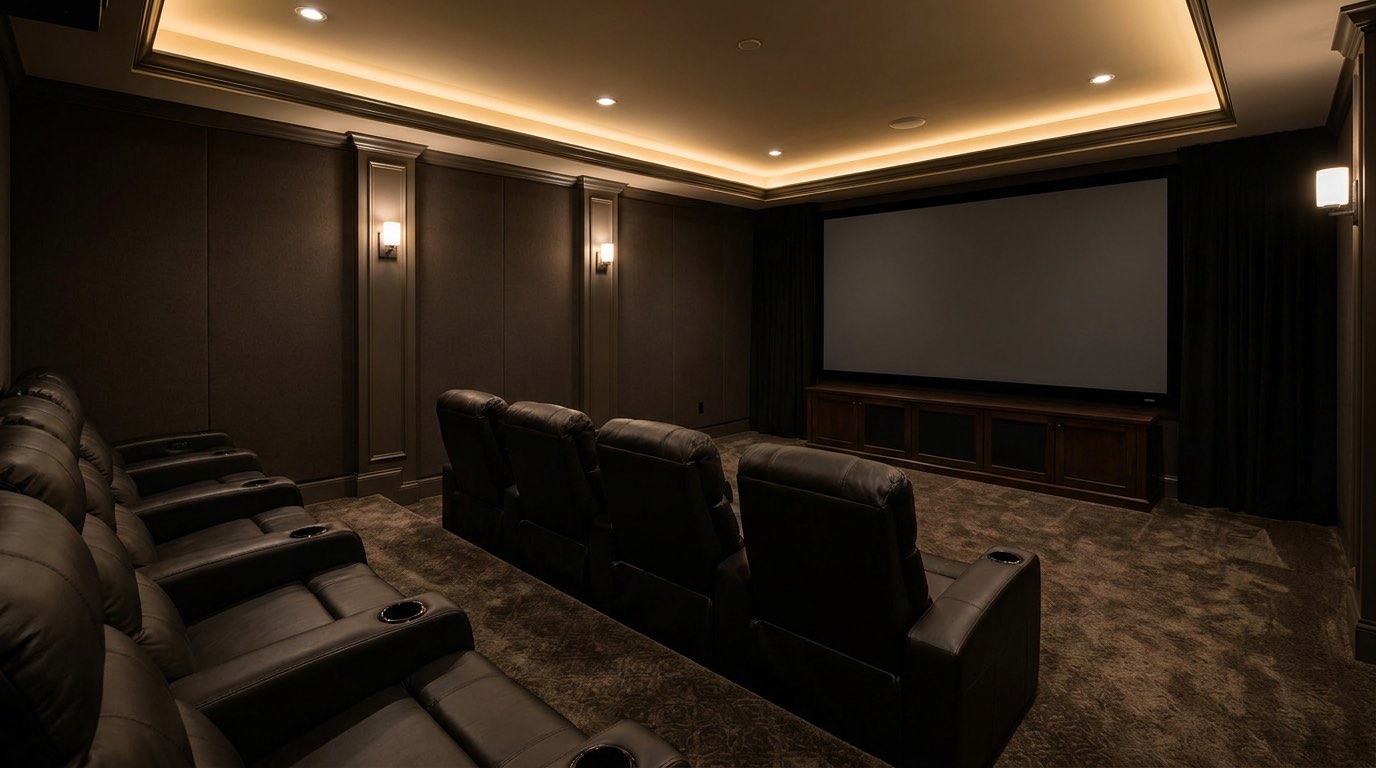
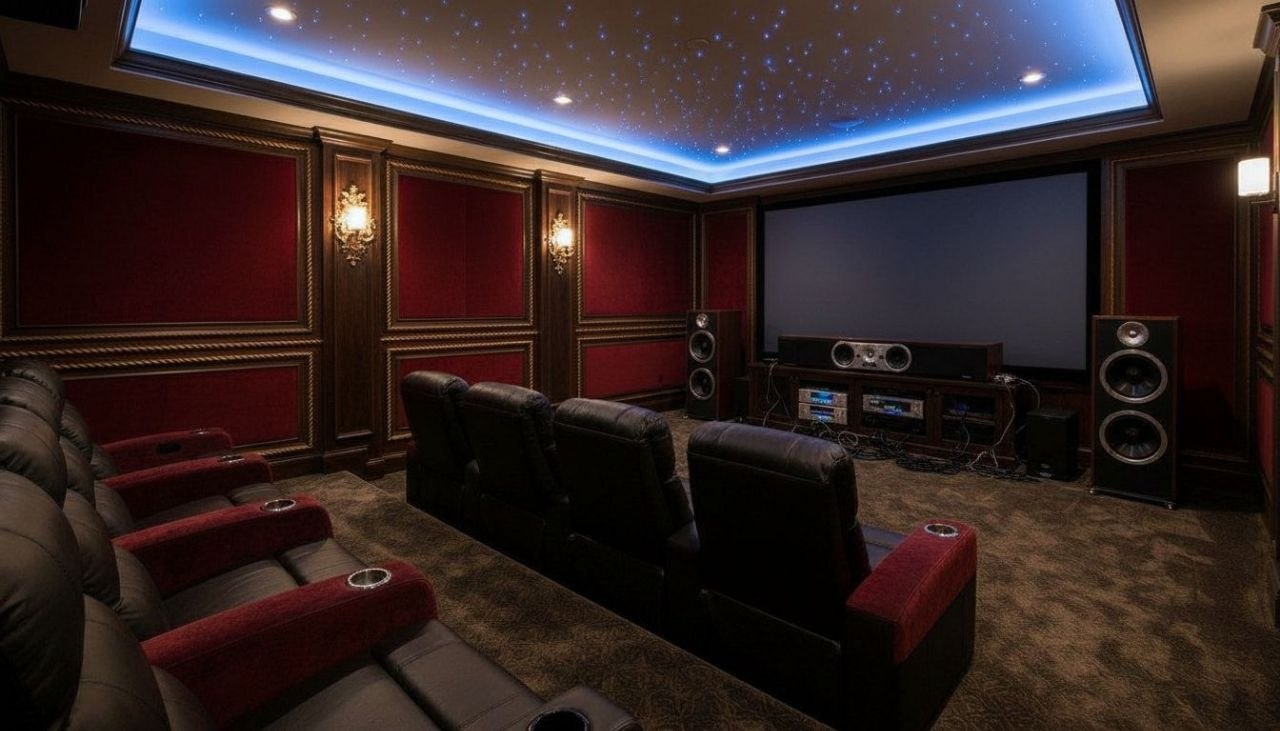
A home theater is the one room where you want the walls to disappear. Unlike a living room that has to look bright and welcoming all day, a theater earns its drama from darkness, light control, and a single point of focus: the screen. The best redesigns lean into that. Think deep charcoal, espresso, or near-black walls in a flat or matte finish that swallows reflections instead of bouncing projector light back at your eyes, paired with a dark ceiling so nothing competes with the picture. Carpet underfoot and heavy fabric on the walls aren't just cozy choices, they tame the echo that makes dialogue muddy in a hard-surfaced room.
Great theaters also get the geometry right. Seating sits back roughly 1.5 to 2 times the screen's diagonal, a second row rides up on a 6 to 12 inch riser so nobody stares at the back of a head, and recliners leave breathing room on the sides for a side table and a drink. Layered in around all of that: warm bias lighting behind the screen, dimmable sconces or step lights, and blackout treatment on any window.
It's a lot of moving parts, which is exactly why seeing options on your real room beats imagining them. RoomGPT lets you do that in seconds.
Design tips for your home theater
- Paint walls and ceiling a matte deep charcoal or near-black so projector light isn't reflected back and contrast stays punchy on screen.
- Position the front row about 1.5 to 2x the screen diagonal away, and raise any second row on a 6 to 12 inch riser for clear sightlines.
- Add fabric-wrapped acoustic panels at first-reflection points on side walls plus a thick area rug to cut echo and sharpen dialogue.
- Run warm dimmable bias lighting behind the screen or TV to reduce eye strain and make blacks look deeper without washing out the image.
- Use low-level step lights or floor LEDs along aisles and risers so people can move safely without anyone turning on a bright overhead.
- Hide the gear: a fabric-front equipment niche or rear closet keeps blinking boxes and cable clutter out of your sightline and out of the picture.
See your home theater in 100+ styles
Tap any style to explore home theater ideas, or open the app to apply it to your own photo.


Redesign your home theater now
Download RoomGPT free and transform your space in seconds.
See how it works

Explore other rooms
Frequently asked questions
What wall color works best for a home theater?
Dark, low-sheen colors like charcoal, deep navy, espresso, or near-black perform best because matte finishes absorb stray light and boost on-screen contrast. You can preview several dark palettes on your own room in the RoomGPT app before committing to paint.
How far should seating be from the screen?
A good rule of thumb is to sit back about 1.5 to 2 times the screen's diagonal measurement, so a 120-inch screen wants roughly 15 to 20 feet of viewing distance. Adjust closer for an immersive feel or farther if you get eye fatigue.
Do I really need acoustic treatment in a theater?
Soft surfaces make a big difference: fabric panels at first-reflection points, carpet, and heavy curtains cut the echo that muddies dialogue and bass. Even a thick rug and upholstered seating noticeably improve clarity in a small media room.
Can I turn a regular living room into a theater look?
Yes. Blackout shades, a darker accent wall behind the TV, warm bias lighting, and a sectional facing a single focal point go a long way. Snap a photo in RoomGPT to see your living room reimagined as a theater in seconds.
What lighting should a home theater have?
Skip bright overheads. Layer warm bias lighting behind the screen, dimmable wall sconces, and low step or floor LEDs along aisles. Everything should be dimmable so you can drop to near-dark for movies and brighten gently for intermissions.